 Osama Bakry
E-commerce Product SEO Case Study
Arabic pages written in English. English pages written by a machine.
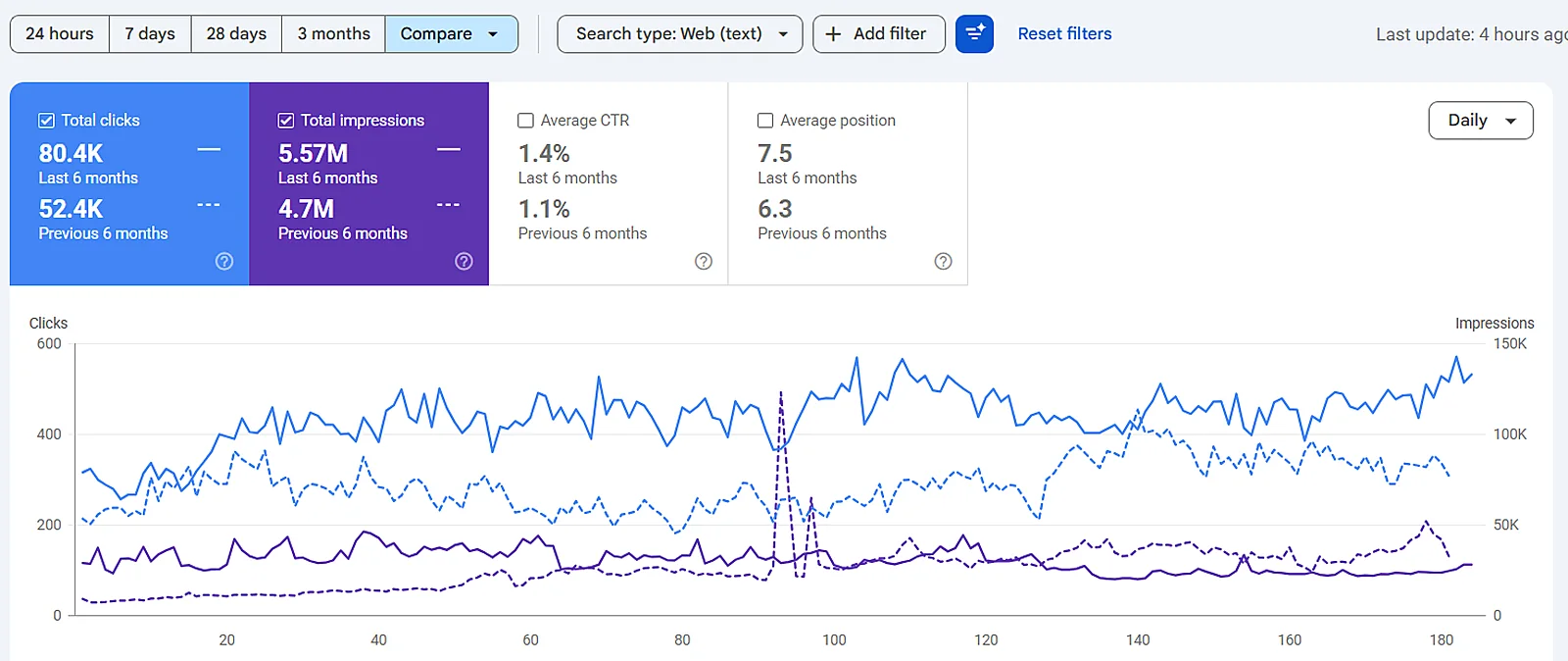
What I walked into on the product pages.
The Arabic product pages were written in English. The English ones had been written by AI or pushed through machine translation, and read like it.
Many products had no description at all. A shopper comparing two products found nothing to compare.
The AI answers and the index, from Google's own reports.
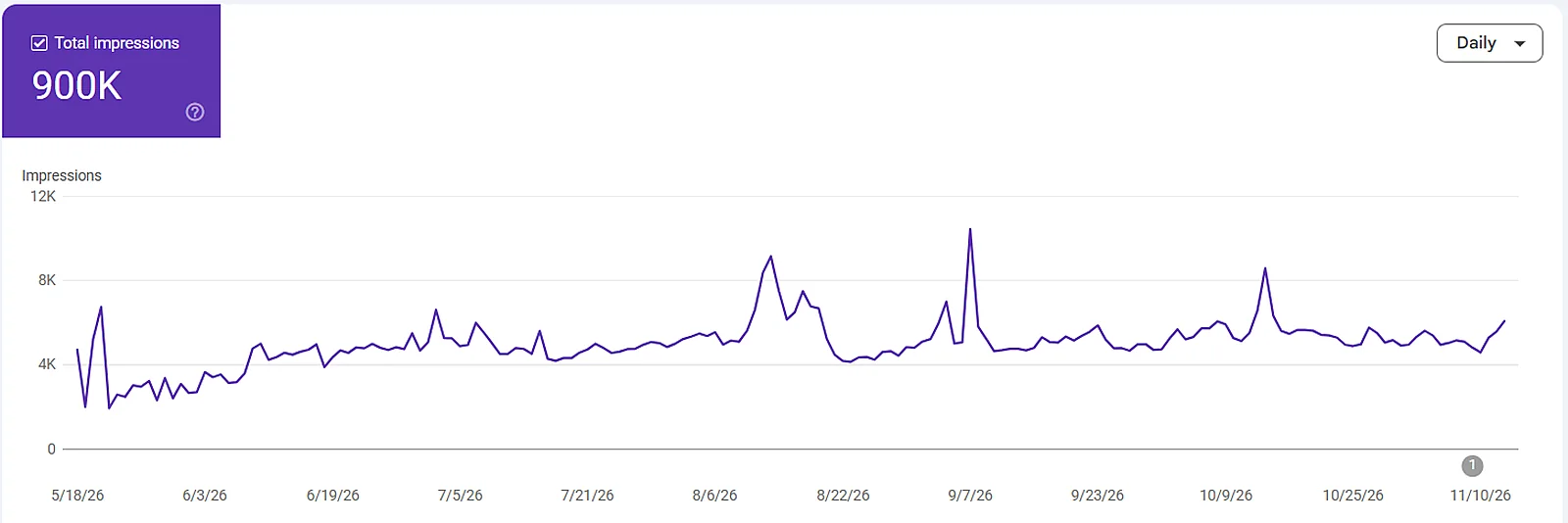
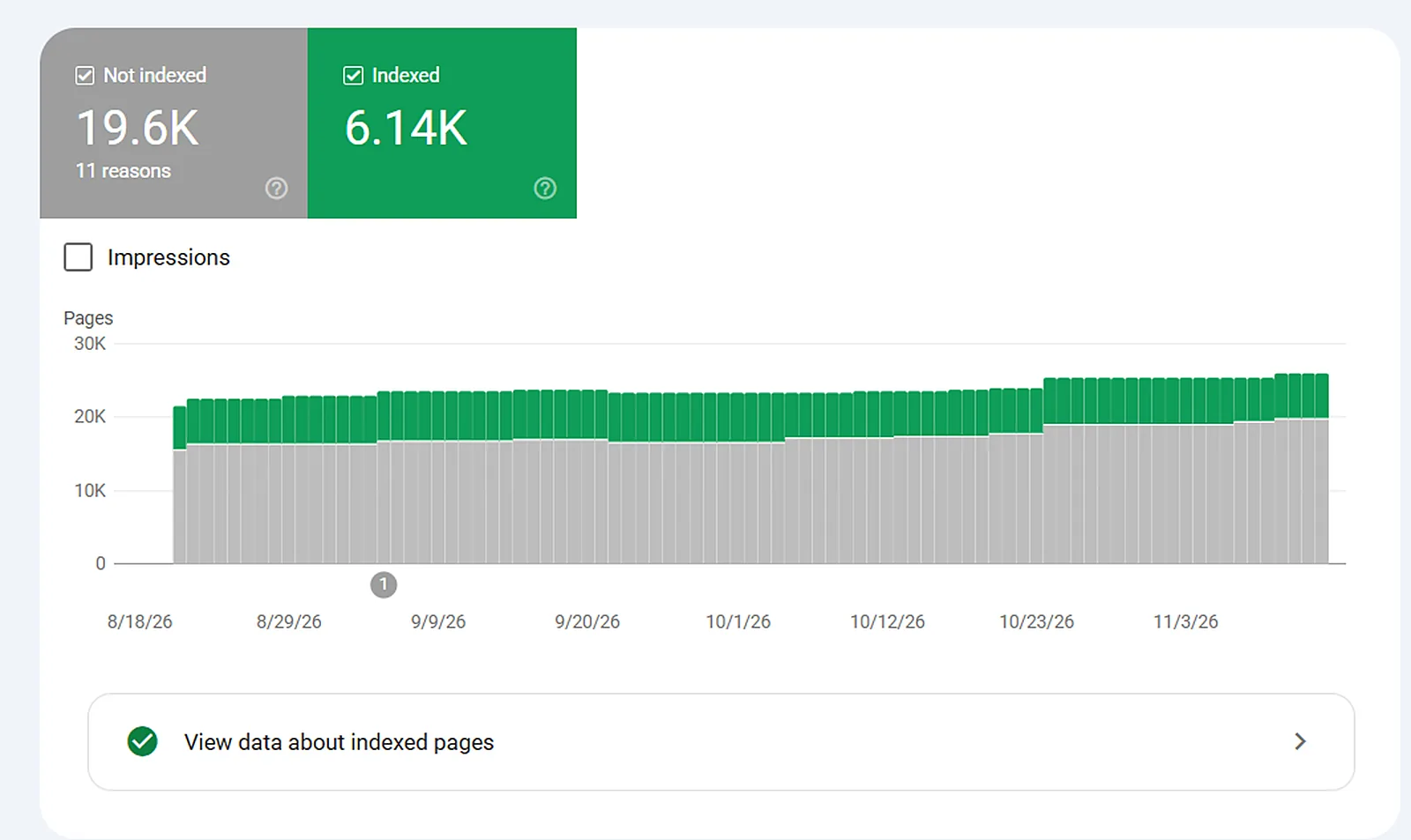
What was wrong with the product pages, and what replaced it.
Every product description had been written by AI, and read like it.
Rewrote the product pages around what shoppers actually search for.Arabic pages were written in English, and Arabic text sat inside the English ones.
Separated the two languages, so each page speaks one.Many products had no description at all.
Wrote one for every product, with the specifications checked against the manufacturer.Category pages aimed at nothing in particular.
Reviewed every category and matched it to the words shoppers use.Nothing for shoppers who were still comparing.
Published 18 articles, each one from keyword research.How each page is written now.
Every product page now rests on two things: what shoppers actually search for and ask before they buy, and the manufacturer's own specifications.
The first decides what the page talks about. The second makes sure every number on it is right.
Same product, before and after.
Six sample products, each written the way the store's pages were before, and the way they are written now, in English and in Arabic.
The samples did not load. Check your connection and try again.
What each of the 1,700+ pages now has.
- A meta title and a meta description, written to the right length.
- A clear heading and an overview that says what the product is.
- Key features, a specifications table and a section on how it performs.
- Who it is for, why to choose it, and the questions people really ask.
With thousands of products, writing them one by one was never going to finish. I built a workflow that writes them in bulk, from what shoppers search for and the manufacturer's own specifications.
What the store has in Google now.
80.4K clicks in the last six months, against 52.4K in the six before.
Pages in Google's index up from 1.36K to 6.14K in a year.
1,700+ products optimized in Arabic and English.
Organic search brought 59% of the store's tracked revenue over five months.
Next case: Real Estate SEO Case Study →
Sounds like your site? Send it.
Tell me what is going on. It is a paid consultation, 30 or 60 minutes. Book a session, and we set the time by email.
Book a consultation